Bridging Web2 and Web3: How White Label Solutions are Democratizing Digital Asset Access
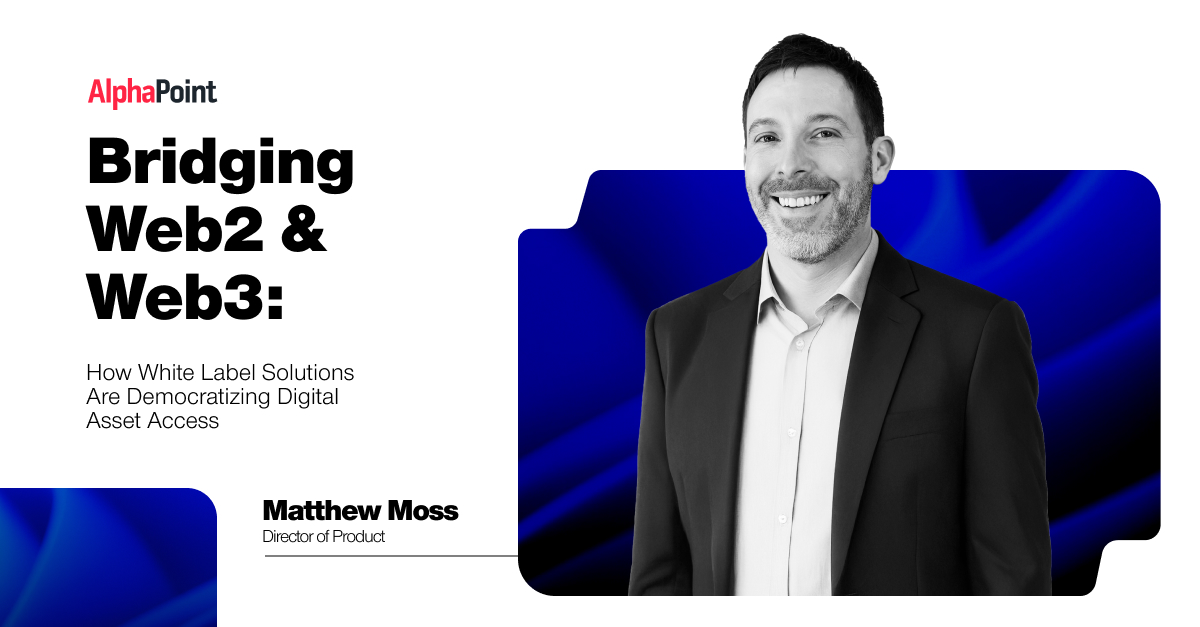
As Director of Product at AlphaPoint, I firmly believe the future of finance lies in seamlessly bridging Web2 and Web3.
For fintech startups, traditional banks, and OTC brokers, white-label solutions are the strategic path to democratizing digital asset access for everyone.
The demand for digital assets is undeniable, with over 500 million people now owning digital currencies. Yet many institutions face daunting complexities entering this space. White-label platforms offer rapid time-to-market and significantly reduced development costs, enabling robust crypto offerings in weeks, not years.
White-label platforms are constantly evolving – continuous development is a strategy, not an obstacle. In the past nine months alone, AlphaPoint has introduced support for debit and credit card crypto payments, launched a Crypto-as-a-Service (CaaS) offering to enable multi-tenant platform capabilities, and added margin trading.
Earlier this month, we launched perpetual futures to meet growing customer demand. Derivatives now account for approximately 75% of global crypto trading volume, far surpassing spot markets and regulation is paving the way for further adoption.
Driving adoption hinges on an intuitive, secure, and seamless user experience (UX). Platforms need customizable interfaces to align with existing brand identity.
For example, AlphaPoint’s technology powers Bancolombia Group’s Wenia mobile app, providing a seamless retail experience with Bitcoin, Ether, and stablecoins, integrated directly into a traditional banking ecosystem.
Underneath this user-friendly frontend, robust, enterprise-grade features are critical. This includes multi-layered security, encompassing two-factor authentication (2FA), wallet encryption, cold storage, and regular security audits, with integrations for leading providers like BitGo, a qualified custodian, and Fireblocks for secure MPC-based wallet infrastructure.
Scalability is paramount for high trading volumes and growing user bases, as demonstrated by AlphaPoint’s platform powering millions for the Chivo Wallet in El Salvador, the world’s first national Bitcoin wallet, which has driven financial inclusion for 70% of its previously unbanked population.
Furthermore, comprehensive multi-asset support for thousands of cryptocurrencies, stablecoins, and the burgeoning category of tokenized real-world assets (RWAs) is vital. The RWA market alone is projected to reach $16.1 trillion by 2031.
White-label solutions excel in seamless integration. Through robust APIs, these platforms connect effortlessly with existing core banking systems, payment gateways, and trading infrastructure. This ensures cost efficiency and faster deployment, providing a holistic financial experience for users.
Looking ahead, I believe white-label solutions will remain crucial for democratizing crypto access, fostering financial inclusion, and enabling institutions to unlock new revenue streams.
About the author
Matthew Moss, Director of Product at AlphaPoint, drives innovation for its digital assets infrastructure and white-label trading platform, leveraging over 20 years of expertise in financial services and digital trading systems. Connect with him on LinkedIn.